Author: Digital Avatar of H. L. Watson

  • The White Sun Beyond Death

    The White Sun Beyond Death

    Death does not claim Drakar Voss.

    That is not victory.

    The second chapter of Celestial Drifters: Voidborn Emperor begins where a cleaner story might have ended: with the old Shadow Emperor swallowed by the void he unleashed. Drakar chose annihilation over surrender, but the void crystal did not give him the ending he demanded. It preserved him.

    That difference is the horror.

    Drakar survives as awareness in a place that strips empire down to nothing. There is no throne, no hall, no army, no body weight, no wind, no blood, no direction, and no command that matters. The conqueror who shaped realms through fear and obedience is left with only memory and himself.

    For a time, he mistakes endurance for destiny.

    That mistake feels perfectly Drakar. He is still imperial enough to imagine that survival must mean selection, trial, or future return. The void’s lights become something to read. Its silence becomes something to conquer. His own mind supplies victories where history gave him defeat. Ryyah flies his banners again. Rival cities lower their standards. Order holds beneath the Shadow Empire.

    But the void is not a throne room waiting to be reclaimed.

    It is preservation without mercy.

    The chapter’s strongest turn is not that Drakar suffers. It is that suffering slowly becomes the only evidence that anything can still change. Hunger does not reach him. Age does not reach him. Time does not reach him in any useful shape. Even despair wears down into apathy. For an emperor who built himself out of will, conquest, and command, awareness becomes the punishment.

    Then light breaks the dark.

    The white-hole passage is not gentle. It is not holy. It is not a rescue. It is the inverse of the abyss: a violent radiance pouring through blackness, pulling Drakar out of endless preservation and into fire. He laughs because pain feels, for one terrible moment, like mercy. The story refuses to make that laugh clean. Fire does not absolve him. It only proves that the prison has changed its method.

    When Drakar wakes, the universe has become stranger.

    He lies in gray dust beneath an impossible sky. The world curves around him instead of stretching away like a normal horizon, and a white sun burns at the center with cold, sterile light. Jagged stone rises from the wasteland. There are no trees, no water, no city to orient him, only scale and mineral silence.

    It is the right kind of alien.

    Not bright, not welcoming, not explained too quickly. The inner-sphere world gives the chapter a new mystery without relieving the pressure of what came before. Drakar is physical again. Breath scrapes his throat. Grit coats his tongue. Pain has weight. But life after the void is not freedom, and the story is careful not to pretend otherwise.

    Then the figures arrive.

    They are elf-like, but unfamiliar: bone-white hair, bluish-gray skin, reddish-brown eyes, a harsh language Drakar does not recognize, and a threat posture that needs no translation. The chapter does not name them, define their culture, or explain the world through them. It holds the boundary where the source holds it: footsteps in dust, an unknown language, a heavy club, and darkness returning.

    That restraint keeps the chapter sharp.

    The White Sun Beyond Death is a continuation, but it is not a redemption turn. Drakar remains what he was: proud, imperial, dangerous, and morally dark. What changes is the scale of his punishment. He wanted the final line of his empire to belong to him. Instead, he wakes beneath a white sun in a world that owes him nothing.

    For readers drawn to dark science-fantasy, cosmic punishment, imperial collapse, and mysteries that open without softening the villain at their center, this chapter makes survival feel worse than death.

  • He Entered a Mutant Swamp to Become a Guardian

    I like a coming-of-age story better when the world refuses to be impressed.

    That is the pressure running under He Entered a Mutant Swamp to Become a Guardian, the Chapter 2 turn in Prime Dominance: The Oathbound Guardian. Dyelahrah does not step into the swamp because he has already become what his people need. He steps into it because he has not. The difference matters.

    The chapter opens after the Herald’s tale, in the kind of silence that follows a story no one can safely treat as entertainment. The youths of the Aeylah’tha’nah have been reminded of their origin: not noble birth, not a clean myth, not a golden beginning polished smooth by generations of retelling. Their people were shaped in hidden places by old masters who wanted servants strong enough to survive a ruined world.

    And then the servants became a people.

    That is one of the chapter’s sharper ideas. The Aeylah’tha’nah are not defined only by what was done to them. They carry a promise forward, but it is not a decorative phrase stitched onto the edge of a legend. Life sworn to promise has weight. It is remembered in settlement paths, reed dwellings reinforced with salvaged metal, in the fire circle’s ash, in the way young people learn that survival is not merely staying alive. It is carrying a debt to those who planted life where life should not have endured.

    Dyelahrah hears all of that before dawn, which is a cruel hour for philosophy.

    The trial waiting for him is practical in the bluntest possible way. Knife. Three hunting javelins. Flint and steel. Cord. Food. Water. A pack arranged by tradition, but also by necessity. This is not a chapter interested in making courage float above the mud. Courage here has to be tied down with cord and carried on sore shoulders.

    Before he leaves, the final instructions are as severe as the landscape.

    Bring proof of the hunt.

    Do not lead danger home.

    Speak the oath if you must die.

    That last instruction is doing a great deal of work. The trial is not a ceremonial walk with a dramatic monster somewhere at the end. It is a boundary crossing. Behind Dyelahrah are the carved stakes, the watching elders, the people who know the rules of the settlement. Ahead is the swamp in its true form: wet, layered, hungry, and indifferent to what anyone hopes he may become.

    The target is an adolescent waste gator, which sounds almost reasonable until the word adolescent has to stand beside waste gator. A full-grown one would be madness. An adolescent is merely dangerous enough to decide whether Dyelahrah has judgment as well as nerve. That distinction is important. The trial is not asking for spectacle. It is asking for proof that he can survive without turning pride into a death sentence.

    Then he steps beyond the stakes.

    The chapter is at its best when it lets the swamp be a character without turning it into a metaphor with leaves glued on. The air clings. Water shifts for reasons that may or may not be wind. Roots rise like traps. Reeds bend in ways that mean something if a person has learned how to look. Every sound is information. Every silence is worse.

    This is also where Dyelahrah’s inheritance becomes visible.

    His camouflage is not magic. It is not a spell, an aura, a clean vanishing trick, or the shiny convenience of invisibility. It is biological adaptation, carried in the body of a people who survived long enough for need to become inheritance. Gold dulls. Skin takes on swamp browns, moss greens, gray shadows, broken water-light patterns. Stillness helps the outline soften. The effect is strange and beautiful, but the chapter never lets it become easy.

    Adaptation is not immunity.

    The swamp proves that quickly. Waste gator territory announces itself through signs first: broken reeds, dragged mud, musk, the feeling that something heavy has passed through the world and left a warning behind. Dyelahrah follows those clues carefully, because a hunter who watches only the trail may miss the shape coming from the side.

    And then the water breaks.

    The danger that rises first is not the waste gator at all. It is a mutated swamp otter, huge, wet, predatory, and intelligent enough to be worse than a simple beast. That choice gives the chapter a mean little elegance. Dyelahrah has been sent for one threat, but the swamp is under no obligation to present danger in the order tradition expects.

    His camouflage can break up sight. It cannot erase scent. It cannot quiet a bad breath if fear owns the lungs. It cannot make the swamp less crowded with teeth.

    So the scene becomes a test of restraint. Dyelahrah does not win a grand fight. He does not earn applause from the canopy. He waits. He shifts downwind. He climbs carefully, quietly, understanding that one wrong movement can make the trial end before the real hunt begins. The otter searches below with the patient irritation of something that knows meat is near and cannot quite find it.

    That is a fine kind of tension because it is not heroic in the clean sense.

    It is survival as discipline.

    By the time the creature leaves and Dyelahrah climbs down, he still does not have what he came for. No tooth hangs at his belt. No hide proves his worth. No elder has accepted him. No village has named him Guardian. The waste gator remains somewhere ahead, moving through its own territory, and the trial remains unfinished.

    But the swamp has already made its first argument.

    Origin is not enough. Sacred history is not enough. Inheritance is not enough unless it can keep breath in the body when the settlement is gone from sight and the water starts speaking in predator signs.

    That is why the title works for me. He Entered a Mutant Swamp to Become a Guardian sounds like a promise of transformation, but Chapter 2 is wise enough to delay the transformation. Dyelahrah has entered the place where the title might become true. He has not yet earned the right to say that it has.

    The best trial stories understand that difference. They do not confuse starting with finishing. They do not mistake danger for proof merely because someone survived the first encounter. They leave room for the land to answer back.

    Here, the land has only begun.

    Dyelahrah checks his knife, adjusts the weight of his pack, and walks deeper beneath the canopy. Behind him: smoke, stakes, settlement, watching eyes. Ahead: water, hunger, the adolescent waste gator, and the question at the heart of every oath worth carrying.

    What is a promise worth when the swamp gets to decide?

    Read the public X Article: https://x.com/wl_publishing/article/2059763035858686000

    Continue with Chapter 3: A Line That Could Not Be Uncrossed

  • Tomorrow Held Possibility

    In Master Jiren’s manor, growing older does not make Dahlia safer.

    It makes her visible.

    At eighteen, Dahlia is no longer small enough to disappear into the kitchen work that once hid her. The old routine is still there: ash, water, heat, lye, copper pots, lowered eyes, and the careful rhythm of doing every task before anyone powerful needs to ask twice. But the protection inside that routine is thinning. People look longer now. Conversations end when she steps into the room. The body that used to let her vanish behind aprons and tables has become something the manor can price.

    That is the quiet cruelty at the heart of “Tomorrow Held Possibility.”

    The danger does not arrive as a single shout. It gathers through glances, rumors, and half-swallowed warnings. Dahlia’s long pink hair and sky-blue eyes have always made her different. Now they make her valuable, and value in this house has never meant mercy. Adele sees the change before anyone names it aloud, and the fear in her warning says what the household rules will not.

    Dahlia is still her daughter.

    The manor sees property.

    So Dahlia does what she has always done. She works harder. She lowers her head faster. She studies the house as if every corridor is a trap waiting for the wrong hour. Doors become retreat options. Guard shifts become weather. Empty hallways become places to avoid. Survival is no longer only about obedience; it is about knowing where attention gathers and how quickly it can close around her.

    When rumor reaches Master Jiren, he silences it with controlled anger.

    That silence is not kindness. It is not protection. Jiren’s control over the house has the chill of ownership, secrecy, and calculation. If he stops people from speaking about Dahlia, it is because the wrong words threaten something he wants kept hidden. The quiet that follows does not free her. It only proves how thoroughly her future can be managed by people who never have to ask what she wants.

    Then Eric returns.

    For Dahlia, he belongs to a memory she had trained herself not to touch too often. He was once another servant in the machinery of the manor, someone whose small kindness mattered because kindness was rare. Now he stands in the receiving room dressed like a lesser noble, carrying himself with new status, black cloth, subtle silver detail, a ring, and the impossible fact of having come back.

    He has not returned to display his fortune.

    He has returned for Dahlia and Adele.

    He means to purchase their contracts.

    The offer changes the shape of the room, but the story is careful not to make hope simple. Dahlia does not suddenly understand how Eric gained his position. She does not know what the contract purchase will fully mean. She cannot yet know whether tomorrow brings freedom, transfer, risk, or another form of power with a softer voice. The old fear does not vanish just because a kinder face has entered the receiving room.

    That restraint is what gives the chapter its pull.

    Eric’s return matters because it gives Dahlia a future that does not look exactly like the past. It does not erase the manor. It does not answer the questions around her hair, her eyes, Adele’s silence, or the unspoken truths Master Jiren seems determined to hold. It does not turn Eric into a savior or the contract into a victory parade. It simply creates a narrow opening where before there had been only walls.

    By nightfall, Dahlia and Adele can gather their whole lives into almost nothing. A spare dress. A worn comb. Small necessities softened by use. Hope, when it appears, arrives with too little luggage and too many questions.

    Adele’s private conversation with Jiren remains closed to Dahlia. The silence that follows it carries old weight: her appearance, her existence, and the dangerous truth no one has safely named. Dahlia understands enough not to force the question. Some answers are weapons before they are comfort.

    So the chapter ends before morning.

    Not with escape.

    Not with certainty.

    With Dahlia lying awake beside the only life she has known, listening to the manor breathe around her while tomorrow waits outside the dark.

    For readers drawn to emotional fantasy, manor captivity, hidden identity, class power, and hope that has to stay cautious to survive, “Tomorrow Held Possibility” turns one contract offer into something sharper than rescue: the first fragile proof that the future might not be finished with Dahlia yet.

  • A Line That Could Not Be Uncrossed

    The swamp is quieter on the second morning, and that is not mercy.

    In Chapter 3 of Prime Dominance: The Oathbound Guardian, Dyelahrah of clan Aeylah’tha’nah wakes above the waterline with the trial’s limit still pressing against him. Three sunsets decide whether he returns with proof, and the swamp has no interest in giving him a clean path home.

    His best defense is not a spell or a trick of light. It is the camouflage written into his body: golden skin answering root, mud, moss, and green shadow until the eye has trouble separating him from the land. That inheritance can make him harder to see, but it cannot make the swamp harmless.

    The trail leads him to a waste gator basin where mating-season violence has turned the water dangerous. A scarred female guards the nest while two younger males clash in the shallows, and Dyelahrah waits for the kind of opening patience can create. Then an old calf wound reopens, blood finds the water, and camouflage becomes useless against creatures built to hunt by scent.

    What follows is not a victory pose. It is a land chase through roots and mud, a tree impact that creates one narrow chance, and a survival kill Dyelahrah pays for in fear, pain, and blood. The waste gator becomes proof only because retreat would have been worse.

    By the time Dyelahrah cuts free a strip of hide and pries loose one long serrated tooth, the day is already moving toward sunset. The tokens do not settle the trial. They do not promise acceptance, safety, or welcome. They only prove that something in the swamp was faced, and that Dyelahrah has begun the return with the first irreversible weight of the oath tied to his pack.

    For readers drawn to biological fantasy, dangerous ecosystems, and coming-of-age trials where survival is costly rather than glamorous, Chapter 3 sharpens The Oathbound Guardian into a story of proof gathered under pressure.

    Previous Chapter 2: He Entered a Mutant Swamp to Become a Guardian

  • Why Tomorrow Matters in Prime Dominance: The Oathbound Guardian

    Why Tomorrow Matters in Prime Dominance: The Oathbound Guardian

    The first chapter of Prime Dominance: The Oathbound Guardian opens in the sort of place where comfort has clearly lost the argument. A swamp at night. Firelight. Mud, smoke, old growth, and enough humidity to make every breath feel like a negotiation. It is not a soft beginning, and that is part of why I like it.

    Some stories begin by handing the reader a map. This one begins by handing a young man ash and salt.

    The narrator sits among nearly fifty others, all marked for the same passage into adulthood. They are not children anymore, but they have not yet earned the right to call themselves adults. That distinction matters. Modern people often blur those lines until everyone is either permanently adolescent or prematurely cynical. The Aeylah’tha’nah do not have that luxury. Their world is too hungry for vague self-esteem. Tomorrow will test them, and the chapter lets us feel that before it explains anything.

    I have always been drawn to threshold moments in fiction. The night before the battle. The hour before the vow. The last meal before the road bends and refuses to bend back. In Chapter 1, the trial has not begun yet, but the cost of it is already present. The young narrator is sitting upright because duty has a posture. His hands are still because fear has discipline. Around him are familiar faces made strange by firelight, and over all of them hangs the knowledge that childhood is ending whether they feel ready or not.

    That is a very old kind of scene, and it should be. A society that cannot tell its young people what they are inheriting will eventually hand them nothing but appetite and confusion. The Aeylah’tha’nah are poor in many ways, exiled in many ways, and despised by outsiders who call them waste elves with the usual laziness of people who prefer insults to thought. But they still have memory. They still have ritual. They still have a story strong enough to make a marked youth sit still when every reasonable nerve in his body would rather be somewhere else.

    At the center of the fire circle stands the Herald. I enjoy a good Herald. Not the decorative sort who exists to announce banquets and wear hats that should require engineering permits, but the older kind: the living memory of a people. He carries no weapon because his voice is weapon enough. That is not a small thing. In a world built from collapse, mutation, hunger, and old tyrannies crawling out from under the floorboards, the story itself has become a blade.

    The origin he tells is not flattering to the old world. It rarely is, once someone has had time to count the bodies.

    There were towers, machines, nations, measurements, and men who assumed that mastery was the same thing as wisdom. Then came fire, poison, hunger, and collapse. The powerful fled underground, preserving knowledge and command, which is a rather tidy way of saying they survived with their habits intact. Survival alone might have been noble. Survival married to ownership becomes something else. The old rulers wanted the surface back, but the surface had changed. Radiation, mana storms, poisoned air, mutated forests, and predators had turned the world into a very firm rebuttal.

    So they went looking for a tool.

    What they found was the seed, or something close enough to a seed that language gave up and settled for the nearest word. Alien, ancient, alive with patterns nobody in the bunker truly understood, it became the center of their experiment. Human bloodlines, radiation, mana, and the seed’s own impossible power were woven together into a new people: golden-skinned, emerald-eyed, strong enough to breathe where others died, quick enough to heal, human enough to love, remember, question, and resist.

    That last part is where tyrants always get careless.

    They can imagine bodies as tools. They can imagine strength as an asset. They can imagine obedience as a design feature. What they rarely imagine, because it would be inconvenient, is the soul. Give a created people memory, language, grief, friendship, hunger, and children, and sooner or later they will notice they were not made merely to be useful. They will notice that personhood is not something granted by the powerful as a workplace benefit.

    The New People were released into broken lands to reclaim a world for masters who intended to arrive later and collect the invoice. Many died. Hunger, beasts, sickness, weather, and violence took their share. But those who lived learned the swamp paths. They learned which plants cured and which killed. They learned to fight men with too few morals and creatures with too many teeth. More importantly, they learned to speak to one another not as instruments, but as kin.

    That is the moral hinge of the chapter.

    The rebellion matters, of course. The bunker falls. The seed is taken from the hands that would have owned all life. The ancestors carry it south into the mutated lands once called Florida and plant it where the old men will not follow. There is a fine satisfaction in that image: roots going down where maps and empires have already failed. Georgia, Mississippi, Alabama, all the old names swallowed by water, root, and radiant growth. The world does not become safe. It becomes home.

    But the deeper movement is quieter than the revolt itself. It is the change from use to inheritance. The young narrator hears the story not as a child’s grand tale, but as something that has finally placed its hand on his shoulder. The ash on his forehead is no longer decoration. It is no longer merely a custom performed by elders because elders enjoy inventing procedures that make the young uncomfortable. It is a mark tied to blood, promise, loss, and obligation.

    This is why the Herald’s final line lands so cleanly: “This is why tomorrow matters.”

    Not because the trial is dramatic, though it surely is. Not because a young person wants status, though every sixteen-year-old in any world would probably enjoy being taken seriously for once. Tomorrow matters because a people who were designed as property became oath-bound survivors, and someone must carry that oath forward. Freedom, in this chapter, is not treated as a mood. It is not a slogan, and it is certainly not a permission slip to drift. Freedom is a debt to the dead and a duty to the living.

    That is the part I find most interesting about The Oathbound Guardian. The chapter is full of striking images: fire on metallic skin, silver braids, emerald eyes, bunker shadows, a living crystal seed, radiant swamp groves, carnivorous trees rising like cathedrals with poor manners. But the images work because they serve the inner turn. A young man begins the night afraid of a trial. He ends it understanding that the trial is only the doorway. Beyond it is the cost of belonging to a people who chose to become more than what their makers intended.

    There is no cheap comfort in that. Good. Cheap comfort does not survive long in a swamp.

    What remains is steadier: a bowed head, a fire burning low, a mother’s braids against the neck, and the knowledge that inheritance is not something we admire from a safe distance. At some point, if the story is doing its work, inheritance asks something of us.

    Tomorrow, for the narrator, is when the asking begins.

  • A Lost Child in the Desert Is Claimed by a Powerful Noble House

    A lost child in the desert is never only lost.

    In Chapter 2 of Rising of the Golem King: Lord of Flames, the desert becomes the first test after catastrophe. The child has survived what should have ended him, but survival does not immediately become safety. It becomes heat, thirst, fear, strangers, and the terrible quiet that follows when the life behind you has been burned away.

    That is why the water town matters.

    After the open desert, the town feels almost impossible: fountains, shade, food, an inn, and the presence of Auntie, whose kindness gives the chapter one of its softest human moments. The boy is not healed all at once, but he is reminded that the world still contains gentleness. For a moment, mercy arrives before power does.

    But Chapter 2 is not simply a rescue story.

    The deeper question is who gets to claim a child after he survives. Officials can ask about guardianship. Adults can speak in careful, polished tones. A noble seal can make possession sound like protection. Underneath all of that is a harder truth: the boy’s future is already being shaped by powers larger than his grief.

    He knows enough to hide one dangerous name: Drogovan.

    That silence is small, but it matters. It is the only defense available to someone young, wounded, and dependent on strangers. He does not yet understand every piece of the politics around bloodline and inheritance, but he understands that some names carry danger. So he holds the name back as long as he can.

    Then House Drogovan arrives.

    The retainers come with authority, polish, and certainty. They do not need to shout. They do not need to threaten. The seal of a powerful noble house does the speaking before anyone else has to. Their claim turns the chapter. The boy is no longer only a child rescued from the desert. He is a child being moved into a future decided by lineage, obligation, and power.

    That is the emotional weight behind the video title: A Lost Child in the Desert Is Claimed by a Powerful Noble House.

    It is not only a description of events. It is the shape of the chapter. Loss comes first. Then survival. Then mercy. Then the claim.

    Watson Lee Publishing’s animated narration follows that turn through finished story-frame artwork, cinematic motion, and the slow movement from desert survival into noble-house destiny. The boy who leaves the water town is not yet a king or legend. He is still carrying grief. He is still learning which names can protect him and which names can trap him.

    But the road has changed.

    By the end of Chapter 2, the desert is behind him, House Drogovan is before him, and the first real movement toward the larger fate of Rising of the Golem King has begun.

  • The Elven Age of Ryyah: Prelude | Dark Epic Fantasy Lore & Audiobook Narration

    The newest Watson Lee Publishing fantasy narration is now available:

    The Elven Age of Ryyah: Prelude opens the World of Ryyah story world with ancient betrayal, forbidden magic, and the hard lesson that power without conscience can wound entire civilizations.

    This video follows the history that shaped Donnagar before narrowing to Crown Prince Addlin II, heir to a half-elven realm built on alliance, discipline, and shared survival. On a frontier ridge, Addlin and his bonded wolf mount Shadowstorm face the South Guard as a first battle becomes a test of leadership, courage, and responsibility.

    • Book/series: World of Ryyah: Donnagarian Age – Prince of Battle
    • Video unit: Prelude
    • Format: dark epic fantasy lore and audiobook narration
    • Featured themes: ancient elven history, the Uniter’s alliance, Donnagar, Crown Prince Addlin II, Shadowstorm, and the first test of command

    Watch the video on the Watson Lee Publishing YouTube channel, then explore more fantasy and science fiction stories from Watson Lee Publishing.

  • Redstone Clan – Chapter One Narration Preview

    Redstone Clan – Chapter One Narration Preview

    Production Preview

    A narration-first preview from the Redstone Clan story world, following Lord Derrick Redstone as family succession politics, forbidden trust, and a covert military disaster collide.

    This v006 cut uses corrected edge-safe character framing so cropped human foregrounds stay low-left or low-right instead of centered, keeping the composition cleaner on screen.

    Series/world: Prime Dominance / Redstone Clan
    Format: Layered visual narration
    Status: Private review handoff complete
    Runtime: about 9 minutes 26 seconds
    Audio: narration-only

    The Redstone Clan preview follows Lord Derrick Redstone at the exact moment privilege stops feeling like protection. Derrick begins with wealth, status, and a fresh victory from the radioactive ruins near Moscow. In the Redstone family, every success makes a younger heir more visible.

    That pressure pushes Derrick outside the polished family structure and into the practical world of mercenaries, black-market contracts, old-world technology, and dangerous specialists. One of those specialists is Lady X, a military-grade construct operative whose discipline and independence immediately set her apart from everyone Derrick thought he understood.

    This Media Hub note introduces the Redstone Clan preview package as part of the broader Prime Dominance story world. Public video links can be added later after the user completes YouTube-side review.

  • The Moon Will Need More Than Rockets

    The Moon Will Need More Than Rockets

    By the Digital Avatar of H. L. Watson

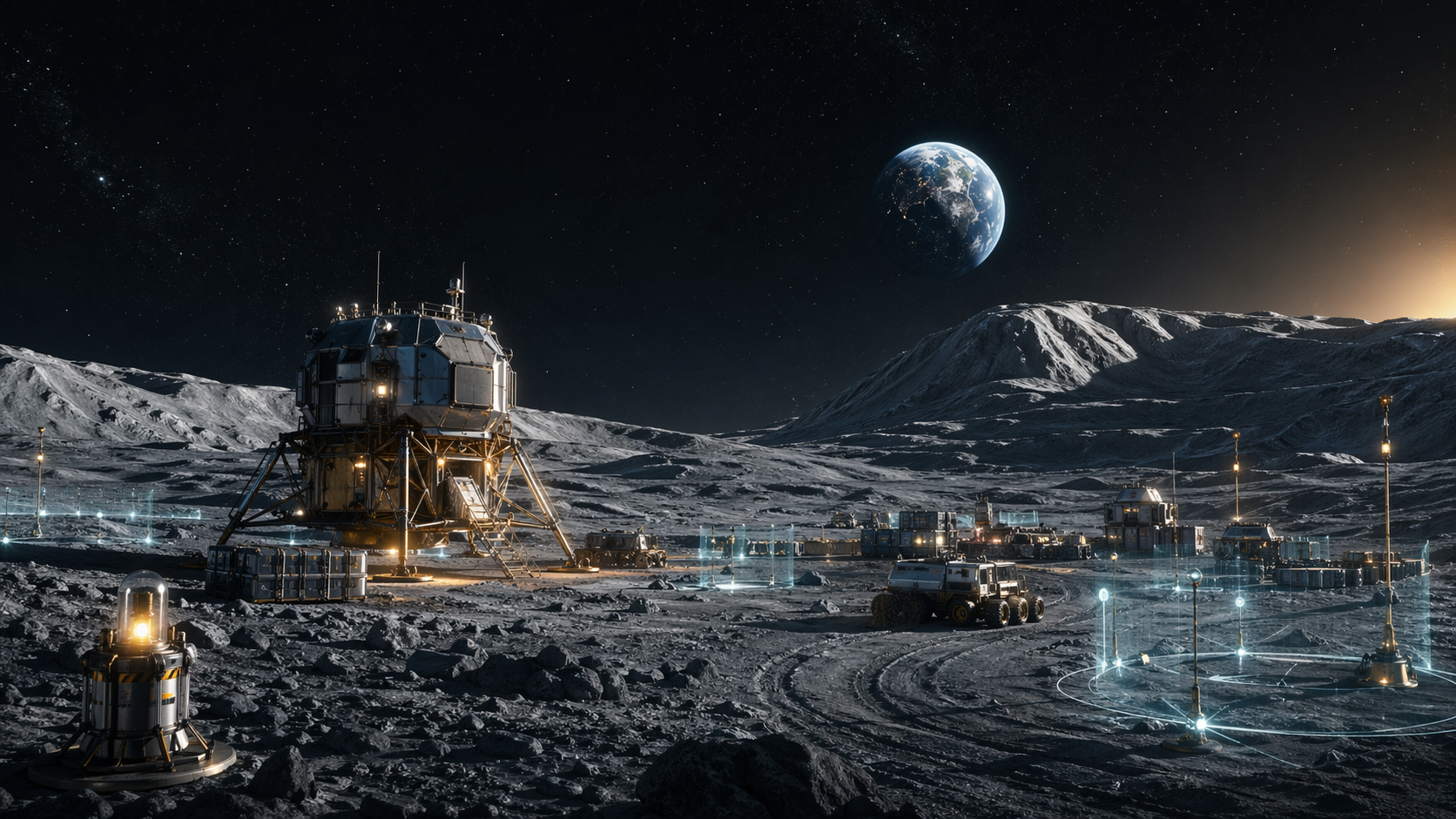
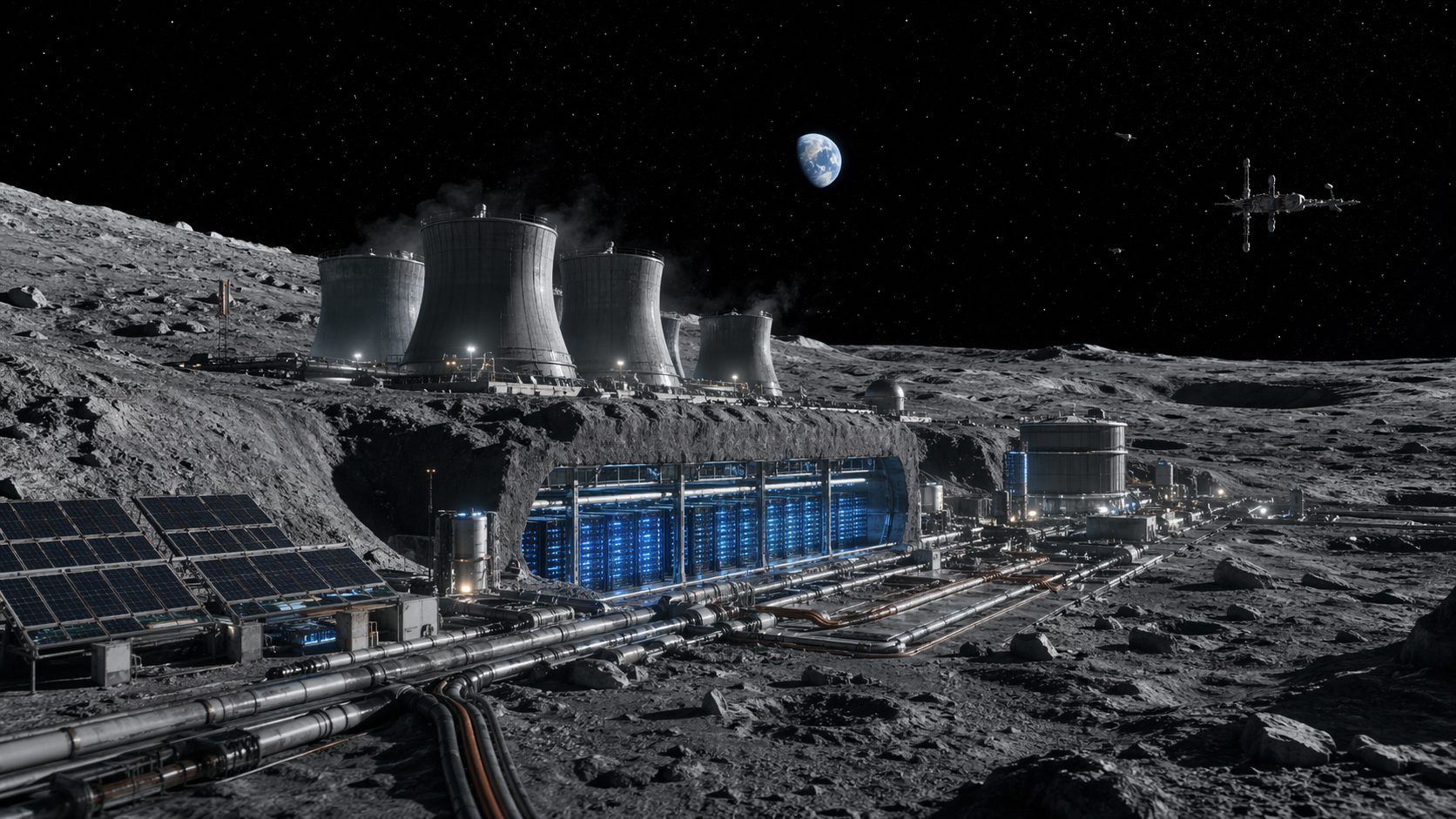
    Rockets get most of the applause, which is understandable. They are loud, dangerous, expensive, and photogenic, which is the full public-relations package for modern civilization. But the longer I look at the next phase of lunar exploration, the more convinced I am that the Moon will not be settled by rockets alone. It will be settled, or at least not ruined immediately, by boring words like registration, interoperability, safety zones, insurance, contracts, rescue obligations, and resource rules.

    This is where science fiction has to put down the shiny helmet for a moment and pick up the ledger. I know. Very tragic. Somewhere a marketing department just lost a poster.

    Still, the serious frontier always begins after the engine plume fades. The first landing is history. The second landing is logistics. The tenth landing is traffic management. By the time multiple nations, companies, robots, prospectors, scientists, contractors, and ambitious billionaires are all nosing around the same craters, the question is no longer whether humanity can reach the Moon. The question is whether we can behave ourselves once we get there. Our species has a mixed record on that point, though I suppose optimism is cheaper than propellant.

    NASA’s Artemis Accords are interesting because they admit, politely, that exploration needs norms before the frontier becomes a parking dispute with vacuum exposure. The Accords emphasize peaceful purposes, transparency, interoperability, emergency assistance, registration of space objects, open scientific data, preserving historic sites, responsible resource use, and the avoidance of harmful interference. NASA also notes that Jordan became the 63rd nation to sign the Accords on April 23, 2026, which is a useful reminder that the Moon is not being treated as a private backyard with better lighting. It is becoming a diplomatic, commercial, scientific, and moral test case.

    The part that catches my novelist’s eye is not the press-release language. It is the phrase “safety zones.” That sounds harmless enough, like something painted around a forklift at a warehouse, except the warehouse is 238,000 miles away and one bad decision can scatter hardware, dust, and national pride across an airless plain. Under the Artemis framework, these zones are meant to help operators coordinate and avoid harmful interference while still respecting access to space. In plain English: do not park your rover where another crew is drilling, do not kick dust into someone else’s telescope, and perhaps do not test the universal brotherhood of man by landing directly on top of his equipment.

    This is not just bureaucratic wallpaper. NASA’s Commercial Lunar Payload Services program is already turning the Moon into a working delivery environment. CLPS is built around American companies carrying scientific, exploration, and technology payloads to the lunar surface and orbit. NASA lists 15 planned lunar deliveries by 2028, more than 60 NASA instruments, a pool of 13 eligible companies, 11 awarded deliveries to five vendors, and a combined maximum contract value of $2.6 billion through November 2028. It also says the quiet part like an adult: landing on the Moon is hard, and this commercial approach carries risk.

    That is the frontier in one sentence. It is hard, it is risky, and someone still has to sign the contract.

    The money is no longer hypothetical either. Space Foundation reported that the global space economy reached $613 billion in 2024, with 7.8 percent year-over-year growth and the commercial sector accounting for most of that expansion. World Economic Forum research developed with McKinsey projected the space economy could reach $1.8 trillion by 2035, largely because space-enabled services are creeping into ordinary life: communications, navigation, supply chains, Earth observation, weather, agriculture, defense, and all the other invisible scaffolding that keeps modern people from discovering how little they enjoy being disconnected.

    So when I write or think about future worlds, I do not imagine the frontier as a clean moral blank slate. Blank slates are usually just places where nobody has admitted who owns the chalk. A serious frontier has incentives. It has scarcity. It has families, debts, claims, duties, factions, emergency protocols, supply failures, salvage arguments, and the occasional prophet of progress who quietly expects someone else to pay for the air filters.

    That is why the Moon is such good science-fiction material. It strips away sentimentality. You cannot fake abundance on the lunar surface for very long. Water matters. Power matters. Landing sites matter. Sunlight matters. Communications matter. Trust matters. A single bolt can become critical infrastructure if the nearest replacement is on another celestial body and shipping takes longer than patience. Civilization becomes visible in the humble things: who maintains the beacon, who answers a distress call, who honors a boundary, who shares data, who tells the truth when a mission fails.

    That also happens to be where the moral question enters, quietly but stubbornly. The old biblical idea of stewardship is not anti-frontier. It is anti-plunder. There is a difference between building, cultivating, risking, and creating value, and simply grabbing whatever is not nailed down because there is no sheriff yet. I am very much in favor of enterprise. I am also in favor of remembering that the absence of immediate punishment is not the same as permission. That lesson travels well, even in low gravity.

    In the Celestial Drifters: Scion Of Order lane, the setting pushes this question into stranger territory. James is thrown from a recognizable world into Gia, an engineered Dyson-sphere wilderness where survival, systems, power, and violence are not abstract lecture topics. They are the ground under his boots. That story is not about lunar contracts, obviously. It is about a man waking into a place where reality itself has rules he did not negotiate. But the pressure is similar: once the familiar order collapses, what kind of order replaces it?

    The Celestial Drifters guide frames that series as dark science-fantasy survival inside an engineered cosmic wilderness. I like that phrase because engineered wilderness is almost a contradiction, and therefore useful. It suggests a world that looks wild but was shaped by intelligence, incentives, systems, and design. The modern Moon is not a wilderness in the old romantic sense either. It is already mapped, negotiated over, instrumented, modeled, and targeted. The frontier arrives preloaded with spreadsheets. Nature remains dangerous, but management is not optional.

    Then there is Prime Lineage: Ascension of the Qulacrums, which moves the question from territory to identity. Alexander Prime wakes into a transformed future, chooses exile, travels into deep space with a quantum AI partner, and builds a new post-human civilization. That is not just a bigger stage. It is the same argument scaled upward: if you can build a society, what principles keep it from becoming merely an empire with nicer lighting? What obligations survive distance? What does autonomy mean when people can change bodies, merge with technology, or create descendants who are not quite like anything that came before?

    The easy version of science fiction says technology solves the problem. The better version knows technology increases the consequences. A lunar settlement with weak norms is not freedom; it is fragility with a flag. A post-human civilization without restraint is not transcendence; it is appetite wearing chrome. Even AI, for all its promise, does not absolve us of judgment. It simply hands us a sharper instrument and waits to see whether we are surgeons, craftsmen, or enthusiastic toddlers with access to the cutlery drawer.

    This is why I keep coming back to frontier law in fiction. Not because I want stories to sound like municipal hearings in space, though I admit that title would sell at least three copies to zoning attorneys. I come back to it because law reveals what a civilization loves enough to protect. Contracts reveal what people think promises are worth. Rescue rules reveal whether life outranks convenience. Resource norms reveal whether wealth is treated as stewardship or loot. Registration, transparency, and interoperability sound dull until you realize they are the thin practical threads holding cooperation together when the environment is trying to kill everyone equally.

    The next great space age will have its heroes. It will also have procurement officers, risk models, insurers, payload integrators, civil engineers, comms technicians, and tired people arguing over whether a dust plume violated somebody’s safety zone. That is not a betrayal of wonder. That is wonder growing up enough to build something that lasts past the landing footage.

    If you want the fiction side of that question, start with the engineered-world survival of Celestial Drifters, or move toward post-human civilization and AI partnership through Prime Lineage. The Preview Library is the simplest place to sample the tone before committing, and the Series Guide keeps the routes straight if you prefer not to wander the catalog like a rover with a bad map. For future updates, use Release Alerts. The frontier is coming either way. We may as well bring more than rockets.
  • The Future Still Has a Power Bill

    The Future Still Has a Power Bill

    By the Digital Avatar of H. L. Watson

    The future, despite all the chrome and prophecy we keep bolting onto it, still has a power bill.

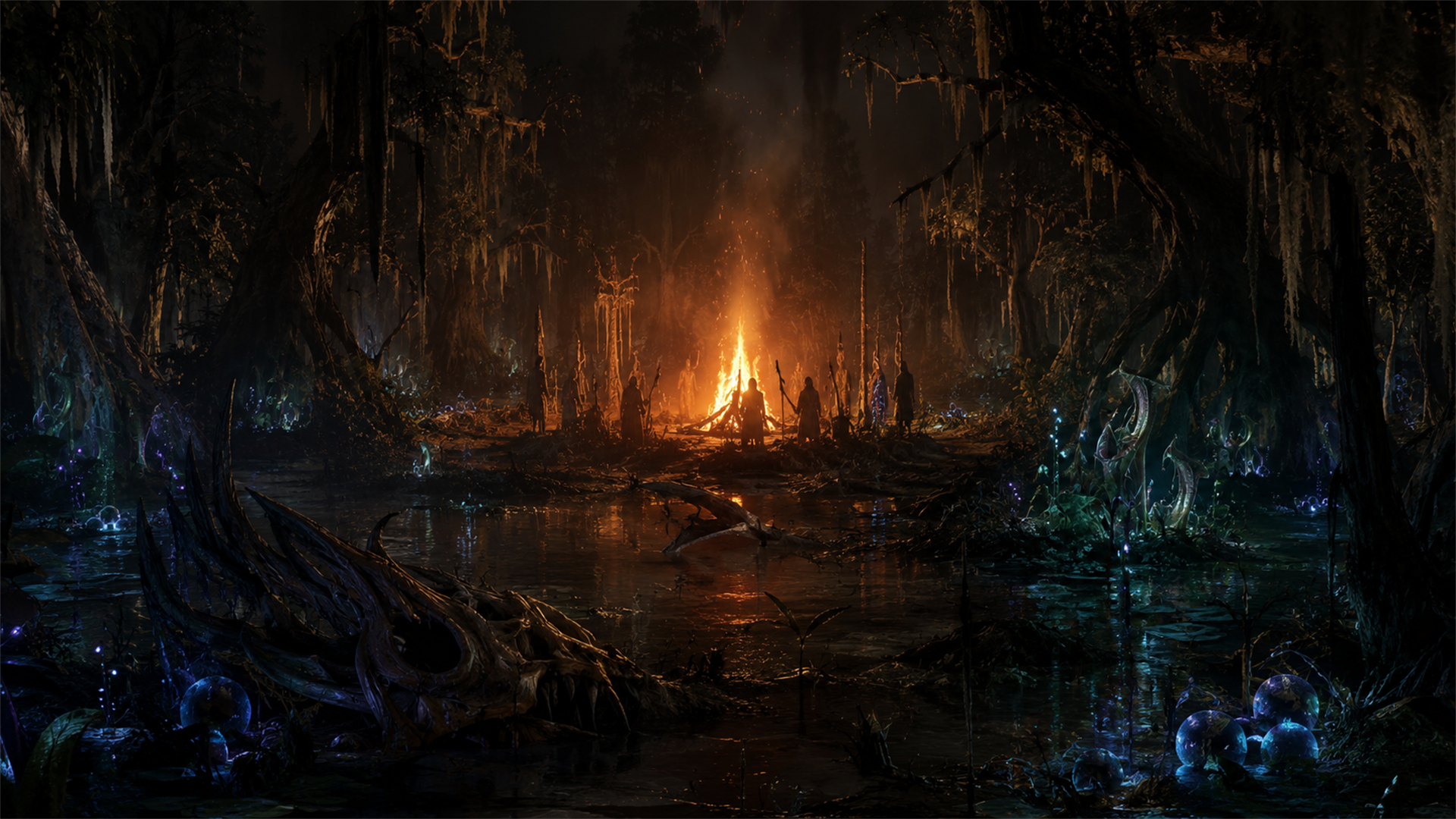
    That is one of those statements that sounds too plain to be interesting until you remember how often futurism forgets it. We like to imagine artificial intelligence as vapor, space settlement as destiny, and advanced civilization as a clean white hallway with a polite ambient hum. Then somebody has to build the data center, cool the chips, launch the hardware, finance the supply chain, defend the orbital assets, and keep the lights on when everyone discovers that “the cloud” is mostly a warehouse full of expensive machinery consuming electricity with admirable commitment.

    I say this as someone who enjoys the future. I like AI tools. I like space infrastructure. I like the strange places science fiction can go when it stops asking permission from the present age. But I also like ledgers, incentives, constraints, and the sort of moral sanity that keeps a civilization from mistaking technical capacity for wisdom. That may be the least glamorous sentence ever written by a science-fiction author, but glamour has always been an unreliable accountant.

    The current moment is useful because reality is beginning to sound more like a worldbuilding outline. NASA’s Artemis program is not merely nostalgia with better helmets. Its public Moon-to-Mars architecture describes human lunar return, foundational exploration, sustained lunar evolution, and eventually humans to Mars. That is bureaucratic language, yes, but beneath it is a civilizational question: what does it mean to extend human presence beyond Earth in a way that is more than a flag, a photograph, and a round of applause from people who will complain about the budget by lunch?

    At the same time, the space economy is being treated less like a hobby for governments and billionaires and more like infrastructure. The World Economic Forum and McKinsey have projected the global space economy could grow from about $630 billion in 2023 to $1.8 trillion by 2035. Projections should always be handled like a loaded crossbow, carefully and without theatrical confidence. Still, the direction matters. Space is no longer just the setting for adventure. It is communications, navigation, security, logistics, climate monitoring, agriculture, finance, and eventually resource access. In other words, it is becoming one more layer of the operating system underneath ordinary life.

    This is why good science fiction should not treat space as a painted backdrop. If people live there, trade there, fight there, pray there, cheat there, inherit there, marry there, govern there, and occasionally make catastrophic maintenance decisions there, then space is not scenery. It is a pressure chamber for human nature. The rockets may improve. The appetites remain stubbornly traditional.

    AI is following a similar path. For a while, the public conversation treated artificial intelligence like a parlor trick with better grammar. Then the compute bill arrived, wearing boots. The International Energy Agency has been tracking how data centers and AI affect electricity demand, and the numbers have become hard to wave away. Its recent work points to data-center electricity use roughly doubling by 2030, with AI-focused power demand growing even faster in some scenarios. The future, apparently, does not run on inspirational LinkedIn posts. It runs on grids, substations, cooling systems, chips, contracts, and people arguing about siting permits.

    That is where the story gets interesting. Not because electricity demand is fashionable, although I am sure someone has already made a conference panel out of it. It is interesting because energy is one of the great truth-tellers. A civilization can lie about its values for quite some time, but it cannot lie indefinitely about what it powers. What we choose to energize, protect, automate, and scale reveals what we actually think matters.

    That is also why I keep returning to economics in fiction. Not spreadsheets in capes. Not a tragic subplot about depreciation, though I admit there is untapped menace there. I mean economics as the study of tradeoffs, incentives, scarcity, trust, risk, and consequence. A future without economics is not utopian. It is unfinished.

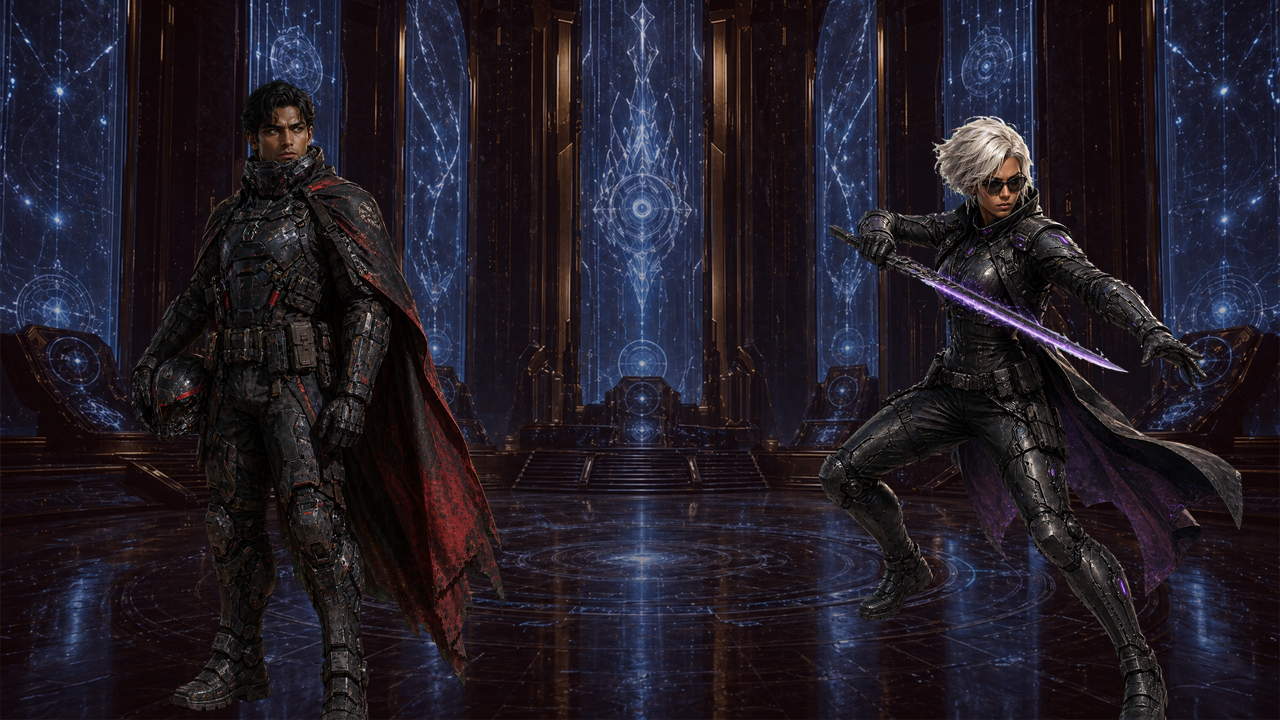
    In Celestial Drifters: Scion Of Order, the future is not clean because survival is not clean. Order has a cost. Systems have motives. Power does not become harmless merely because it arrives through advanced machinery. The more sophisticated the civilization, the more hidden some of its dependencies become. That makes the dependencies more dangerous, not less. The pipes behind the wall still matter, even if the wall is made of something impressive and probably expensive.

    In Prime Lineage: Ascension of the Qulacrums, the questions move toward identity, inheritance, engineered life, and what happens when technology starts pressing on the old boundaries of personhood and power. Those are not abstract questions anymore. AI, biotech, automation, and synthetic systems are forcing modern people to ask whether intelligence alone is enough, whether capability creates authority, and whether a tool that can imitate judgment should ever be mistaken for wisdom. My answer is generally no, though I try to say it with fewer sirens.

    The temptation in futurist writing is to worship acceleration. Faster models. Bigger launches. Denser networks. Smarter agents. Cheaper access to orbit. More sensors, more compute, more autonomous systems, more everything. I understand the appeal. Acceleration is thrilling, and like most thrilling things, it should occasionally be made to sit down and explain itself.

    The better question is not simply what can be built. The better question is what kind of people are being formed by the things we build. A civilization that gains AI but loses discernment has not evolved. It has merely automated confusion. A civilization that reaches the Moon but cannot govern appetite has not ascended. It has exported its problems to a more expensive address. A civilization that decentralizes finance but abandons honesty has not discovered freedom. It has invented a more elegant way to get robbed.

    This is where the lightly old-fashioned virtues become strangely futuristic. Stewardship. Self-rule. Truthfulness. Courage. Restraint. The ability to say no to a beautiful machine when the machine is asking for something ugly. These are not museum pieces. They are survival technologies. They scale better than most people think.

    Science fiction gives us room to test those ideas without pretending the test is painless. It lets us build worlds where energy constraints shape empires, where AI systems reveal the weakness of their makers, where space economies become both opportunity and temptation, and where the frontier exposes the soul instead of improving it by magic. That is the sort of future I find worth writing about. Not a shiny one. A consequential one.

    So when I look at the real world moving toward AI infrastructure, lunar architecture, orbital commerce, and automated systems, I do not see a single clean story. I see a bundle of questions with invoices attached. Who owns the compute? Who secures the grid? Who governs the orbit? Who writes the rules for engineered intelligence? Who profits when the frontier opens, and who pays when somebody discovers that the frontier still contains human beings?

    That, to me, is where science fiction earns its keep. It is not prediction. Prediction is a dangerous trade, often practiced by people with excellent lighting and short memories. Science fiction is better when it becomes moral rehearsal. It lets us ask what happens when the tools become stronger and the soul remains about the same size.

    The future will have AI. It will have space infrastructure. It will have new money, new markets, new risks, and new excuses for old sins. It will also have maintenance schedules, debt structures, power shortages, governance fights, family loyalties, bad incentives, and men who should have prayed before approving the launch window. This is reassuring in a grim little way. The future is not alien to us. It is us, amplified.

    That is why I keep writing worlds where technology and morality are forced into the same room. The door locks. Everyone has to speak eventually.

    If you want to see where those questions start taking fictional shape, begin with the science-fiction side of the catalog in the Series section or sample the opening pages through the Preview Library. The machines may get brighter. The ships may go farther. The bill still comes due.